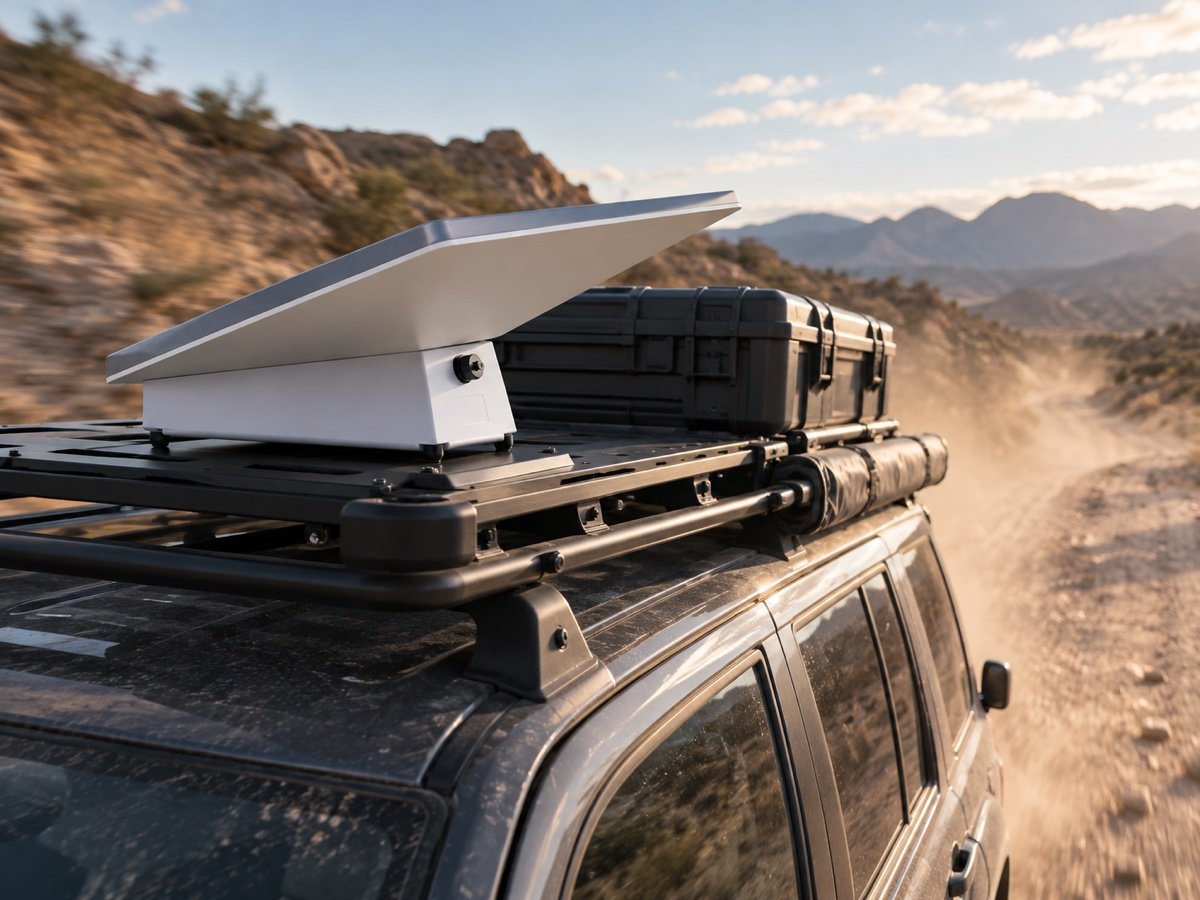
A washboard forest road, an overnight stay on a boat rail, a full day bouncing around in a truck bed — vibration and rough handling aren’t the scenario Starlink Mini’s spec sheet talks about. Our IP65 article already covers what the rating protects against in rain and dust. This one answers the question that comes right after: does the battery — and the connection between it and the dish — actually hold up when the ride isn’t smooth?
Why Vibration Is a Real Risk for Off-Grid Power
The failure mode here usually isn’t the battery cell itself — it’s the connection. Starlink Mini expects a stable voltage the moment it powers on, and it briefly draws a higher current during startup. A loose or jostled DC connector that dips even for a fraction of a second during that window can read as a power interruption, and the dish reboots.
That’s a known weak point with USB-C power banks and any setup running a separate DC cable to the dish — every extra inch of cable is another point that can shake loose over a rough road. It’s not a hypothetical: it’s the same reason a phone charger works fine on a desk and cuts out the moment your car hits a pothole.
How SINVYX’s Clip-On Design Handles Rough Roads
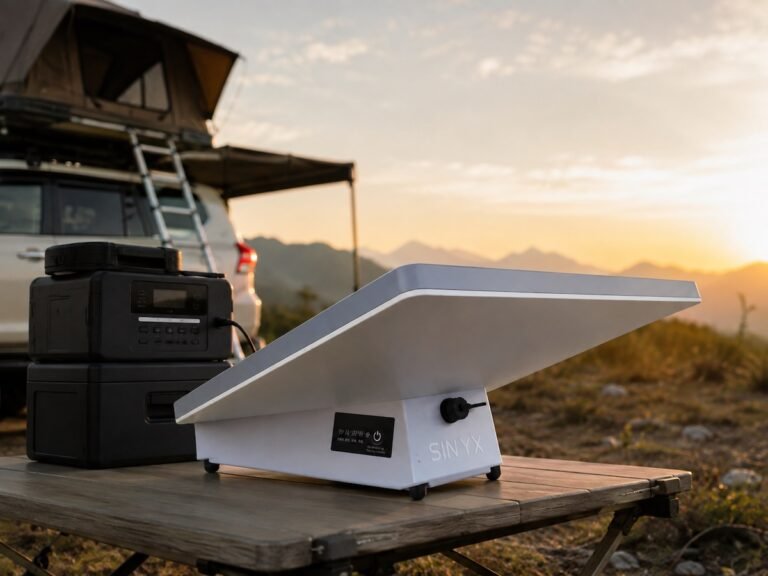
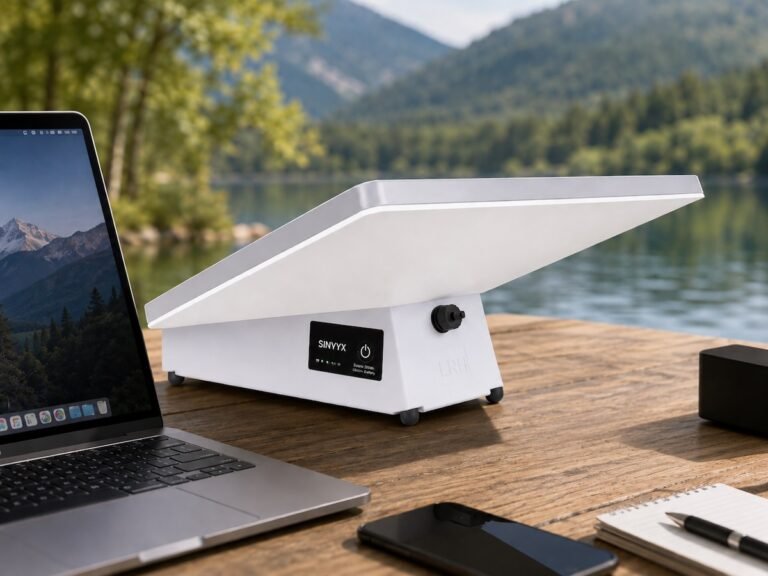
SINVYX batteries skip the loose cable entirely. The battery snaps directly onto the Starlink Mini body through an integrated clip-on connector — insert and it starts charging, with nothing dangling to catch on gear or shake loose over corrugated dirt. Fewer moving parts between battery and dish means fewer places for vibration to interrupt the connection.
The housing plays a part too. Every SINVYX battery — 99Wh through 200Wh — uses the same PC+ASA shell, and the 180Wh and 200Wh models add a wear-resistant exterior with a non-slip base pad, built for the kind of repeated jostling that comes with overlanding or a job site.
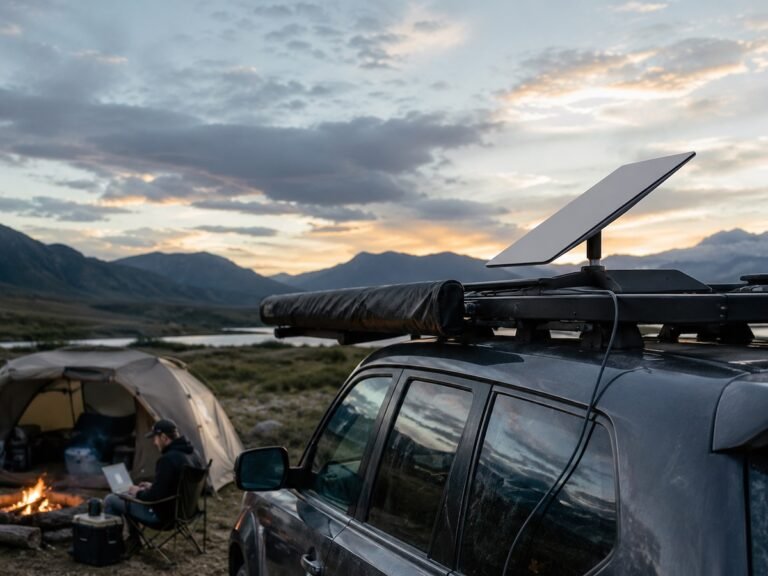
One honest caveat: a clip-on mount reduces the risk, it doesn’t eliminate it. If the dish itself isn’t secured — sitting loose on a dashboard instead of mounted — the battery riding along with it won’t save the connection from a hard enough jolt. Pair the battery with a proper mount for the dish, and the clip-on connection is the strongest link in that chain, not the weakest.
What Happens Overnight Outdoors?
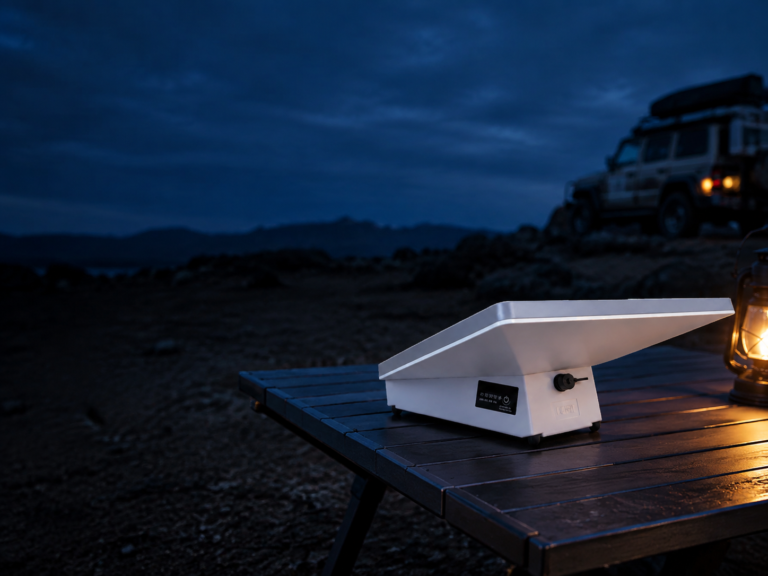
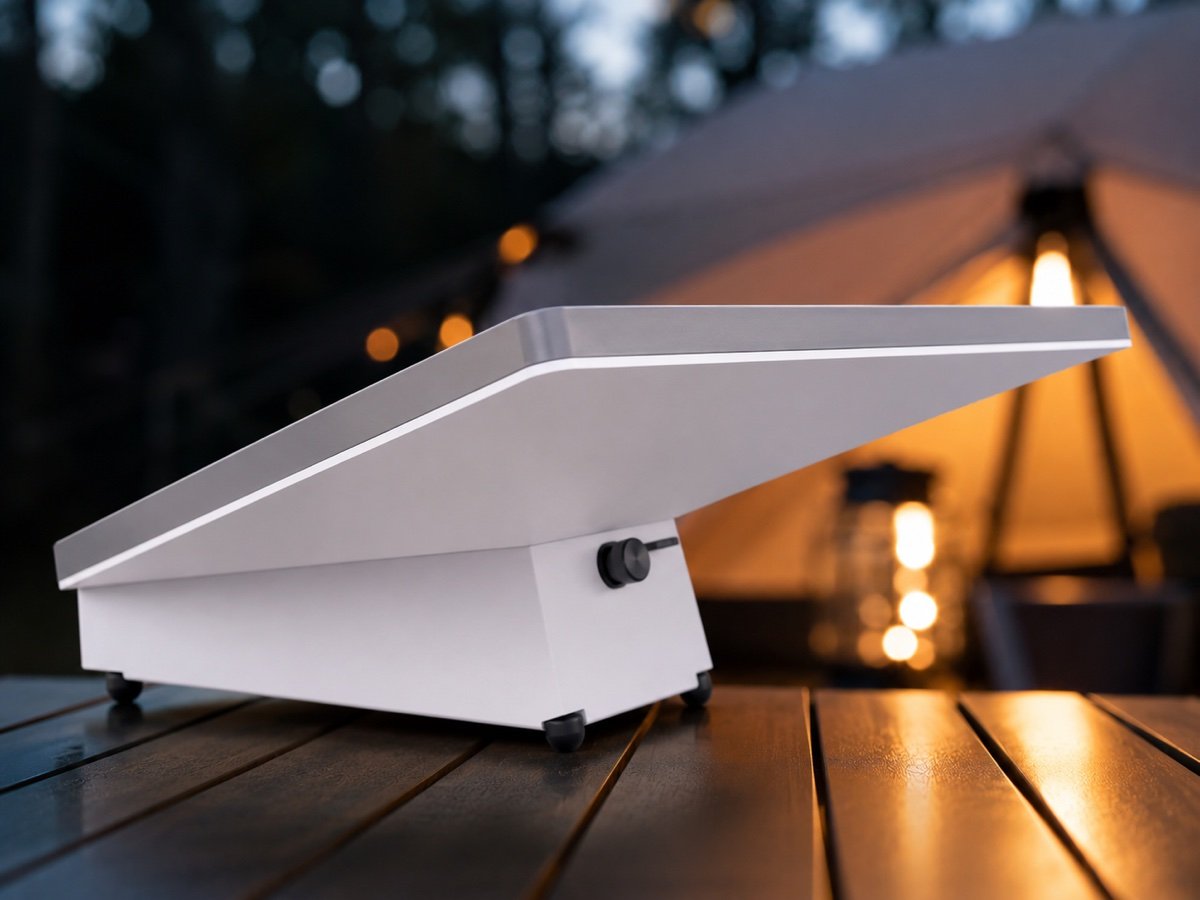
The IP65 article already covers overnight rain — the short version is you don’t need to bring the setup inside every evening. The part worth adding here: a battery left mounted overnight on a car roof, a boat rail, or a campsite isn’t just sitting through rain, it’s also sitting through temperature swings and whatever vibration comes from wind or a rocking boat.
SINVYX batteries are rated to operate from -20°C to 60°C, and the built-in BMS handles overcharge, over-discharge, and short-circuit protection on its own — so a battery left connected and charging overnight isn’t something that needs to be babysat. The scenario this actually rules out is charging with the port exposed in a downpour, which is a rain question, not a vibration one. Charging has its own tighter temperature window, though — see our cold-weather charging guide for the specifics.
FAQ
Can a Starlink Mini battery handle a bumpy dirt road or washboard trail?
The battery itself has no moving parts to shake loose internally — the real risk on rough roads is a loose power connection, not the cell. SINVYX’s clip-on mount removes the loose DC cable that usually causes that problem.
Does the connector come loose from vibration?
The clip-on connector is designed to stay seated once inserted, unlike a separate DC cable that can work its way loose over sustained bouncing. It’s not rated against a specific vibration test standard — SINVYX doesn’t carry that certification — so for extreme off-road use, pairing it with a secure mount for the dish itself is still worth doing.
Is it safe to leave the battery mounted overnight outdoors?
Yes. Between the IP65 housing, the -20°C to 60°C operating range, and built-in overcharge/over-discharge protection, an overnight setup on a roof, boat rail, or campsite doesn’t need to be brought inside or unplugged. Keep the charging port covered if rain is likely, same as the waterproofing guidance in our IP65 article.
Do I need a shock-absorbing mount or case on top of the battery?
Not for the battery specifically — the clip-on design already keeps it locked to the dish. Where a mount matters more is securing the dish itself on a moving vehicle; a battery riding along with a poorly mounted dish is still exposed to whatever jolts the dish takes. Our Starlink Mini accessories guide covers mount options by surface type.
Bottom Line
Rough roads and overnight exposure don’t fail Starlink Mini setups because of a weak battery cell — they fail because of a loose cable or an unsecured mount. SINVYX’s clip-on design removes the loose cable from that equation, and the same IP65 housing and BMS protection that handle rain also cover the temperature swings and long stretches of an overnight setup. Check the 99Wh, 158Wh, 180Wh, or 200Wh product pages for full specs.