
Starlink Mini Battery Runtime: How Long 99–200Wh Last
Planning estimates for Starlink Mini battery runtime at 99Wh, 158Wh, 180Wh and 200Wh, with stated assumptions and capacity tips.
Read more →
Yes, Starlink Mini can get wet. It is officially rated IP67 — dust-tight, and rated to survive submersion in a meter of water for 30 minutes. That’s a genuinely high bar, and it’s a big part of why people trust it on a van roof or a boat deck. But that rating comes with a catch most buyers never read: it only holds with Starlink’s own cable, and it doesn’t extend to whatever’s powering the dish off-grid. If you’re running Starlink Mini on a battery, the actual weak point in your “waterproof” setup usually isn’t the dish. It’s the battery sitting next to it.
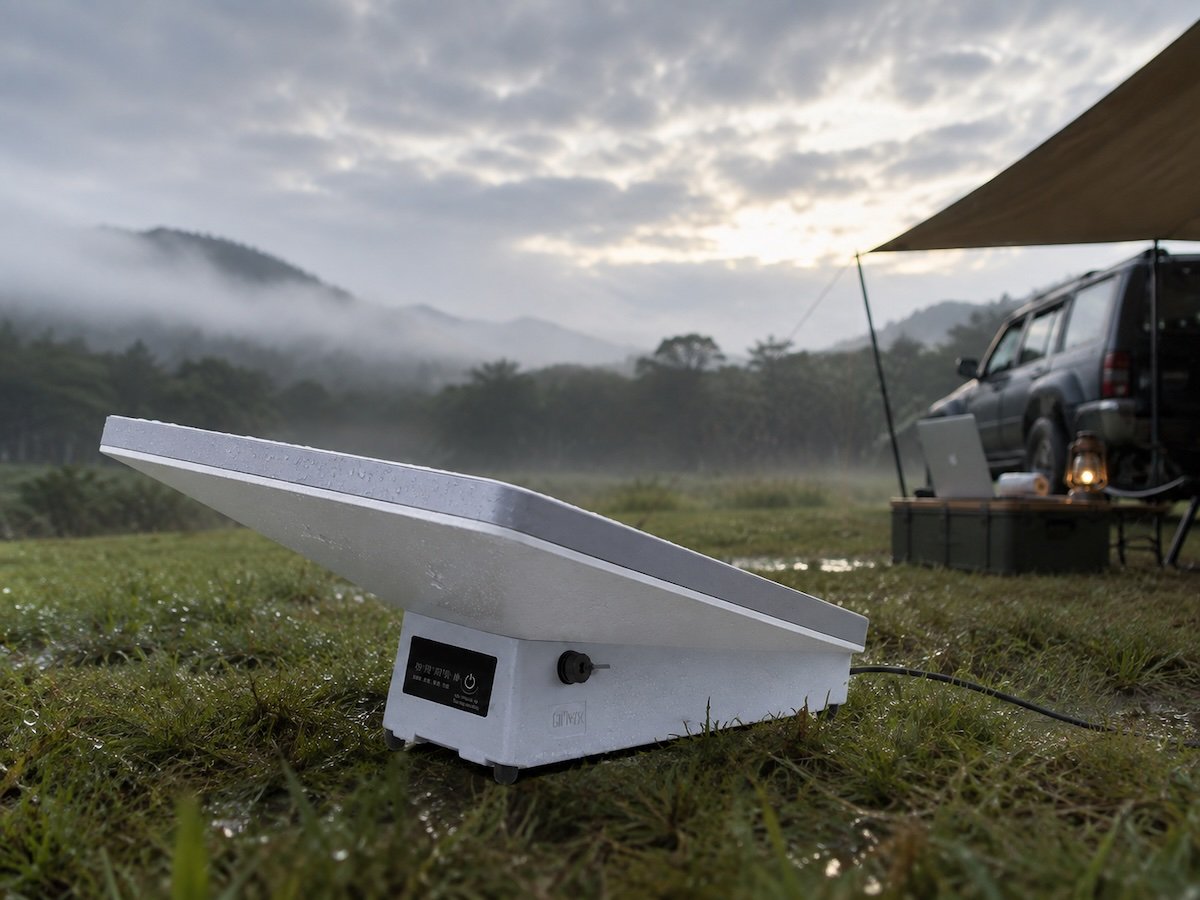
IP67 is real, but it’s narrower than the marketing conversation around it suggests. Two things matter here:
So “is Starlink Mini waterproof” has a clean answer — yes, with the right cable — but it’s the wrong question if you’re setting up outdoors on battery power. The question that actually matters is whether everything else in your setup can handle the same conditions the dish can.
Most consumer power banks have no weatherproofing at all — they’re built for a jacket pocket, not a campsite or a boat rail. Pair one with an IP67 dish and you haven’t built a weatherproof system; you’ve built a weatherproof dish sitting next to an unprotected battery that fails the first time it gets rained on.
That mismatch is the actual gap in most outdoor Starlink Mini setups, and it’s why every SINVYX battery ships IP65-rated as a baseline spec rather than an upsell. Same housing, same rating, across the 99Wh, 158Wh, and 200Wh models — sealed against the conditions the battery, not the dish, is most likely to face outdoors.
IP65 means two things in plain terms: fully dust-tight, and protected against low-pressure water jets from any direction — rain, splashes, a hose-down. It’s not a submersion rating. Dropping the battery in a puddle it can shrug off; leaving it fully underwater is a different situation, and no IP65 device is built for that.
The honest caveat worth knowing, on any IP65 battery — SINVYX included: the rating protects the sealed housing, not an exposed charging port mid-charge. Keep the port covered when it’s not in use and avoid charging in a downpour, and the rating does what it’s supposed to. Temperature is a separate spec worth checking too — see our guide on charging in cold weather and desert heat for the full range.
For camping and van-life setups, IP65 solves two problems people run into constantly:
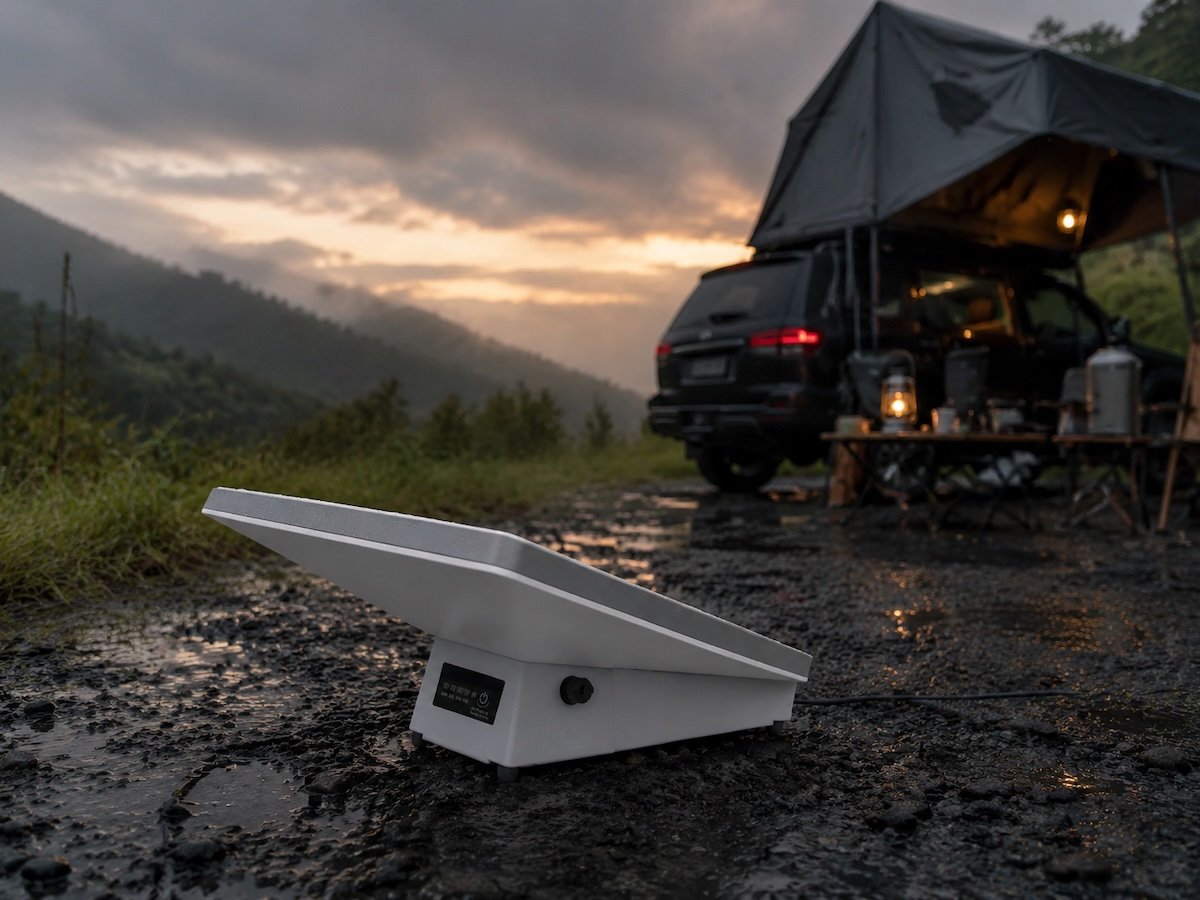
Boats add a layer camping doesn’t: salt. Sea spray is more corrosive than fresh rain, and it’s exactly the kind of exposure that kills unsealed electronics over a season, not a single trip. IP65’s sealed housing keeps salt spray and deck splashes out of the internals, and the housing material is chosen to resist the corrosion that saltwater accelerates on cheaper enclosures.
One caution that applies here more than on land: IP65 handles spray and rain, not the battering a battery would take mounted fully exposed through rough seas. For genuinely severe conditions — a storm, heavy chop — stowing the battery below deck is still the safer call. The rating buys you day-to-day resilience at anchor or underway in normal conditions, not indestructibility.
For power and mounting on board, see our guide to Starlink Mini on a boat.
Skipping weatherproofing to save money is a real trade-off, not a hypothetical one. An unsealed battery that gets rained on can short internally, corrode at the terminals, or fail the connector that’s now your only link between power and dish — usually not on day one, but a few trips in, after moisture has had time to work into the seams. It’s also worth checking before you buy: a cheap Starlink Mini battery pack that skips full IP-rating testing to hit a lower price is a common shortcut, and it’s rarely disclosed clearly on the listing.
Is Starlink Mini itself waterproof?
Yes — Starlink Mini is IP67-rated, but only with Starlink’s own cable, and only for the dish itself. It doesn’t cover a battery or any accessory you add to run it off-grid.
Can I leave my Starlink Mini battery outside overnight in the rain?
With an IP65-rated battery, yes — it’s built to handle rain and splashes without being brought inside every night. Just avoid submerging it or charging it with the port exposed to direct rain.
Do I need a waterproof case if my battery is already IP65-rated?
Not for weather protection — that’s what the rating already covers. A case is more about impact protection during transport; we cover that trade-off in our Starlink Mini accessories guide.
Starlink Mini’s IP67 rating is real, but it only covers the dish — the battery running it off-grid is where most “weatherproof” setups actually fail. Every SINVYX battery ships IP65-rated by default, across 99Wh, 158Wh, and 200Wh models, so the weak link in your setup isn’t the part you didn’t think to check.
Planning estimates for Starlink Mini battery runtime at 99Wh, 158Wh, 180Wh and 200Wh, with stated assumptions and capacity tips.
Read more →
Charging a SINVYX battery while it powers Starlink Mini doesn't damage the cells — the BMS keeps the two paths separate. Here's…
Read more →
Every SINVYX spec sheet lists -20°C to 60°C as the operating range, and that number gets repeated everywhere without the one detail…
Read more →