Best Battery for Starlink Mini: Compare 8 Packs (2026)
Find the best battery for Starlink Mini. Compare 8 packs by capacity, weight, runtime assumptions, mounting and flight limits.
Read more →
Pick RAVION Lite if you want to recharge from any USB-C charger. Pick SINVYX if you want a lower price at 99Wh or 158Wh, a 200Wh option, or a wider -20°C to 60°C operating range. RAVION and SINVYX both build batteries designed specifically for Starlink Mini — clip-on, DC-direct, no generic power bank pretending to fit. That makes them real alternatives to each other, unlike the USB-C banks that need an adapter to work at all. The short version: RAVION’s Lite model charges over standard USB-C, which SINVYX doesn’t offer. SINVYX costs less at every matching capacity, publishes its cell brand and test reports, and goes up to 200Wh where RAVION stops at 158Wh. Here’s the full comparison.
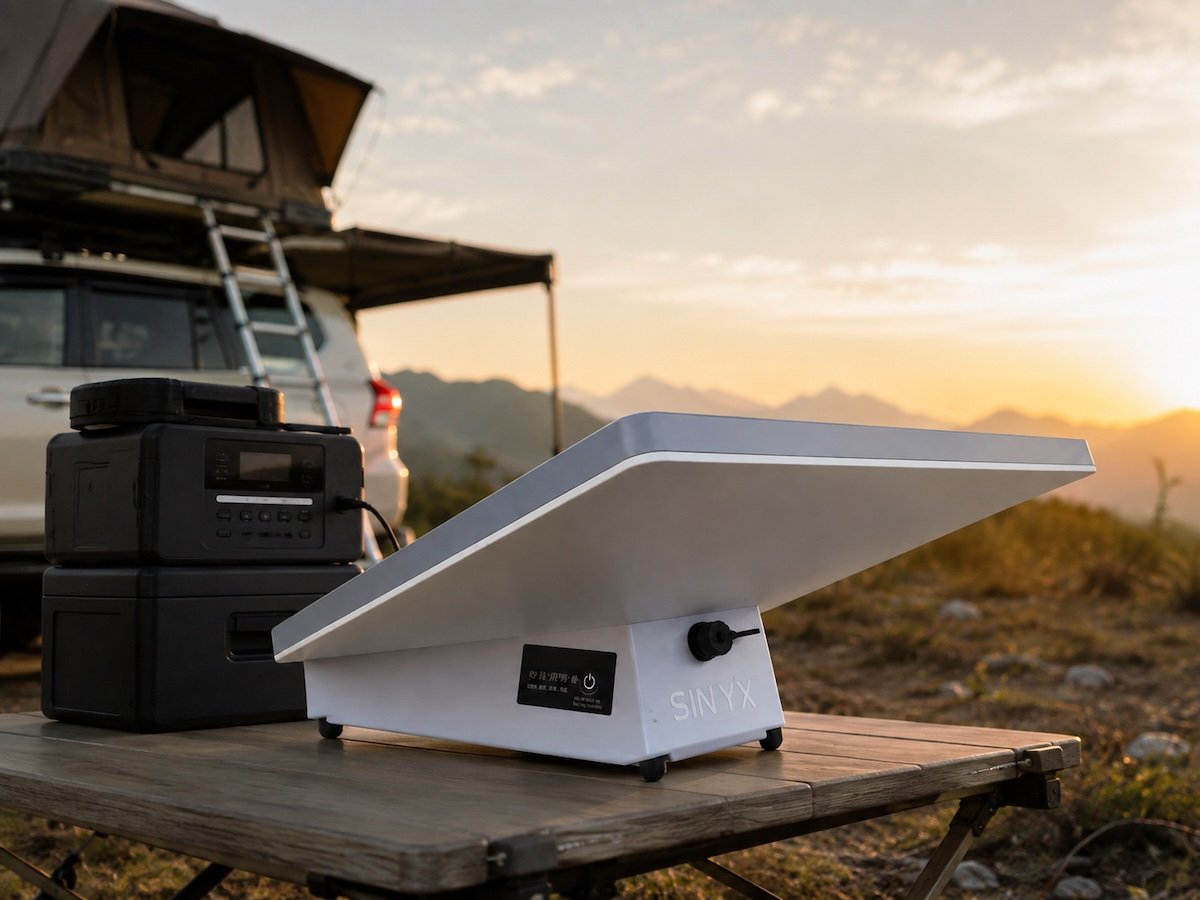
Want to charge from any USB-C PD charger you already own, not just the battery’s original adapter? RAVION’s Lite model does that. Want the lowest price at 99Wh or 158Wh, plus a battery that names its cell manufacturer and lists its safety test reports? SINVYX does that. Need more than 158Wh of runtime? SINVYX’s 200Wh is the only option here — RAVION doesn’t make anything bigger.
| SINVYX 99Wh | SINVYX 158Wh | SINVYX 200Wh | RAVION Lite 99Wh | RAVION 158Wh | |
|---|---|---|---|---|---|
| Price | $149.99 | $199 | $299 | $189 | $329 |
| Weight | 0.79kg / 1.74lb | 1.1kg / 2.42lb | 1.1kg / 2.42lb | 0.86kg / 1.9lb | 1.18kg / 2.6lb |
| Runtime | 2.1–3.4 hrs* | 3.4–5.4 hrs* | 4.2–6.8 hrs* | 4–6 hrs (claimed) | 6–9 hrs (claimed) |
| Cells | Samsung/LG 21700 NMC | EVE 21700 NMC | Samsung/LG 21700 NMC | NCM, brand undisclosed | NCM, brand undisclosed |
| Test reports | UN38.3, UL2743, FCC (MSDS on request) | Same | Same | Not published | Not published |
| Operating temp | -20°C to 60°C | Same | Same | -10°C to 45°C | Same |
| Charging | Original adapter, solar ≤100W, or 25.2V/3A DC | Same | Same | DC wall (~4 hrs) or 76W solar | DC wall or USB-C 60W (Lite only) |
| Warranty | 18 months | Same | Same | 12 months (36-month option, +$9.99) | Same |
*SINVYX runtimes are a calculation at Starlink’s published 25–40W average draw, the same figures as our product pages. RAVION’s are its own claims. At the same draw, batteries of the same capacity run about the same time, so compare Wh rather than quoted hours.
SINVYX specs come from our own product pages. RAVION’s numbers are pulled straight from ravion.us and their Amazon listings — official sources, not resellers.
RAVION has real advantages, and pretending otherwise wouldn’t survive the first side-by-side comparison.
The Lite model charges over standard USB-C. RAVION’s 99Wh Lite ships with a USB-C 60W fast-charging cable alongside its DC cable. That means any USB-C PD charger you already own — phone charger, laptop charger, power bank — can top it up. SINVYX charges through its original adapter, solar, or a 25.2V/3A DC source; there’s no USB-C PD path.
It has a bigger track record on Amazon. RAVION’s two listings carry 259 and 63 ratings at 4.3 out of 5 combined — a meaningfully larger public review base than a newer brand like SINVYX has built up yet. That’s not proof of better engineering, but it is more independent data points for a cautious buyer to look at before spending $300+.
Lower price at every matching capacity. SINVYX 99Wh is $149.99 against RAVION Lite’s $189 — about 21% less for the same nominal capacity. At 158Wh, SINVYX is $199 against RAVION’s $329, a $130 gap. If you’re buying two for a multi-battery setup, that difference adds up fast.
More capacity tiers. RAVION stops at 158Wh. SINVYX goes to 200Wh for anyone who needs a full day off-grid without swapping batteries mid-afternoon.
Named cells, not just a chemistry label. RAVION’s FAQ says its battery uses “NCM (Nickel-Cobalt-Manganese) lithium” — the chemistry, not the manufacturer. SINVYX lists the actual cell brand on every product page: Samsung/LG or EVE, both named 21700 NMC cells. If you want to know exactly what’s inside a battery you’re carrying through airport security, that’s a real difference.
Published test documentation. SINVYX has UN38.3, UL2743 and FCC test reports for its batteries, with MSDS available on request. RAVION’s site and FAQ describe general safety features — overcharge protection, short-circuit protection, temperature control — but don’t publish a list of test reports. That’s not proof RAVION skipped testing; it just isn’t stated anywhere a buyer can check before ordering.
Wider operating temperature range. SINVYX is rated -20°C to 60°C. RAVION’s FAQ lists -10°C to 45°C — a narrower window on both ends. If you’re using Starlink Mini somewhere that gets genuinely cold or genuinely hot, that gap matters more than the spec sheet makes it look.
Runtime and price are easy to compare. The details that matter more are the ones brands don’t always put on the product page.
Is RAVION or SINVYX better for Starlink Mini?
Both are purpose-built, clip-on, DC-direct batteries — neither is a bad choice. RAVION’s Lite model offers USB-C charging flexibility and a longer sales history on Amazon. SINVYX costs less at matching capacities, goes up to 200Wh, and publishes its cell brand and test reports.
Does RAVION disclose its battery cell brand?
RAVION’s FAQ names the chemistry — NCM (Nickel-Cobalt-Manganese) — but not the manufacturer. SINVYX names both: Samsung/LG or EVE 21700 NMC cells, depending on the model.
Can I take a RAVION or SINVYX battery on a plane?
Both brands’ 99Wh-class models fall under the 100Wh carry-on limit most airlines allow without prior approval. RAVION’s 158Wh and SINVYX’s 158Wh both fall in the 100–160Wh range that typically needs airline notification; SINVYX’s 200Wh exceeds 160Wh and isn’t permitted on passenger flights. Always confirm with your airline before you fly.
What actually makes SINVYX different from other Starlink Mini battery brands?
Four things together: DC-direct output matched to Starlink Mini’s voltage, published cell brand and test reports, a temperature range wide enough for both cold and hot climates, and capacity options up to 200Wh for buyers who need more than a single workday.
Neither battery is a bad pick — they’re built for slightly different priorities. RAVION bets on USB-C charging flexibility and a longer track record. SINVYX bets on lower prices, more capacity options, and full disclosure on what’s inside the housing. If you already know you need more than 158Wh, the decision is made for you. If you’re deciding between the two at 99Wh or 158Wh, it comes down to whether USB-C charging convenience or price and transparency matter more to you.
Check the 99Wh, 158Wh, or 200Wh product pages for full specs.
Find the best battery for Starlink Mini. Compare 8 packs by capacity, weight, runtime assumptions, mounting and flight limits.
Read more →
Starlink Mini rebooting on 12V power almost always comes down to voltage instability, not a faulty dish. A raw car 12V circuit…
Read more →