
Starlink Mini Battery Runtime: How Long 99–200Wh Last
Planning estimates for Starlink Mini battery runtime at 99Wh, 158Wh, 180Wh and 200Wh, with stated assumptions and capacity tips.
Read more →
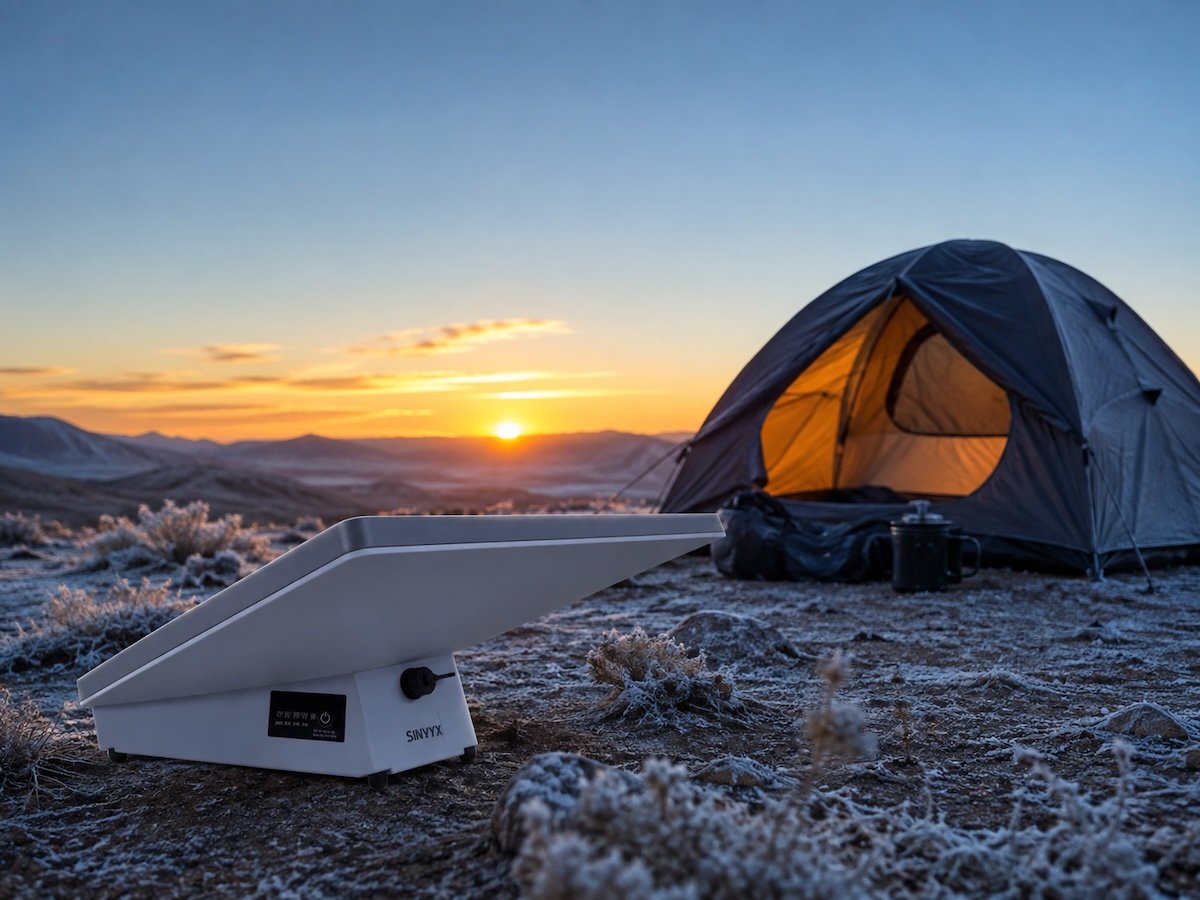
Every SINVYX spec sheet lists -20°C to 60°C as the operating range, and that number gets repeated everywhere without the one detail that actually matters in the field: it’s the range for running the battery, not for charging it. Charging has a narrower window in cold weather, which is why a battery that powered Starlink Mini fine all night in the cold sometimes won’t take a charge the next morning. Add dust from a trailhead and a multi-night trip with no outlet in sight, and here’s what actually protects the battery — not just what the spec sheet says.
SINVYX’s BMS enforces two different temperature windows, and the gap between them is the part most buyers never see. Discharge — powering Starlink Mini off the battery — cuts off below -20°C and above 60°C, the full range on the spec sheet. Charging cuts off below 0°C (32°F) and above 58°C, a noticeably tighter band on the cold end.
That’s not a defect. Charging a lithium cell below freezing risks lithium plating on the anode, a real degradation and safety issue, not a marketing caveat. The BMS refusing to charge below 0°C is the protection circuit doing exactly what it’s supposed to do.
In practice: pull the battery out of a frozen truck bed at sunrise and it’ll power Starlink Mini immediately — discharge works fine down to -20°C. Plug the charger in at the same moment and nothing happens until the cell warms past freezing. Give it 20–30 minutes somewhere warmer — a cab, a tent, inside a sleeping bag — before connecting the charger, and it charges normally.
The high end works the same way, just less obviously. Ambient air might read 40°C at a desert trailhead, but a sealed, dark-colored housing sitting in direct sun runs hotter than the air around it — sometimes by a wide enough margin to approach the 58°C charge cutoff even when the thermometer doesn’t look alarming.
Discharge has more headroom here (60°C), so running Starlink Mini off the battery in full midday sun isn’t the concern. Charging in that same spot is where the margin gets thin. If you’re plugging in during peak heat, a few minutes of shade — under a vehicle, inside a tent vestibule, behind a pack — keeps the housing well clear of the cutoff instead of right at the edge of it.
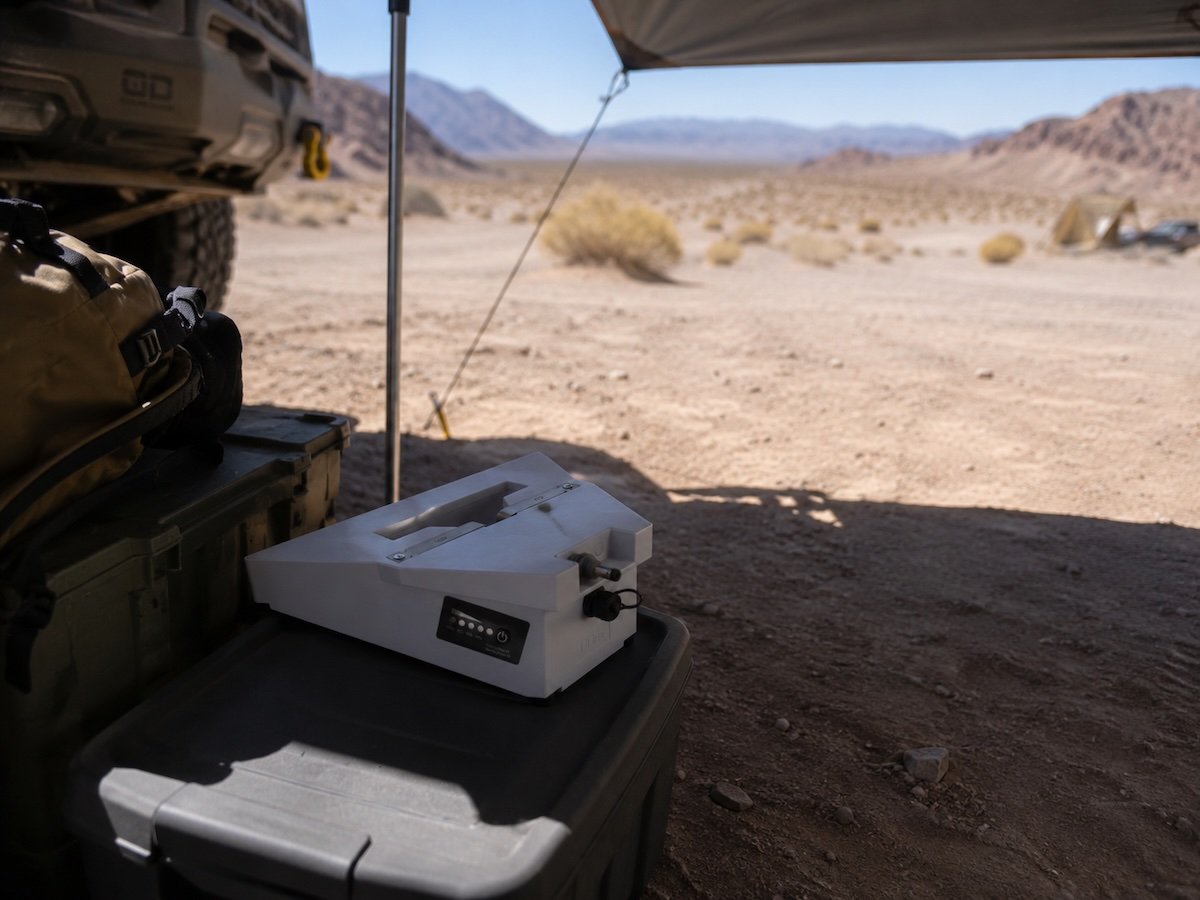
Our IP65 article covers what the sealed housing keeps out on its own. What it doesn’t cover is the handling habits that undo that seal at a dusty campsite over several days.
The rating protects a closed housing — it doesn’t protect an open charging port mid-connection, and it doesn’t stop grit from packing into a seam if the battery sits directly on loose sand for days at a time. A few habits matter more than the rating itself on a multi-day desert or trailhead trip:
Our vibration and overnight article already covers a single night outdoors and rough-road handling. The part that’s different on a multi-night trip isn’t any one night — it’s what accumulates: dust builds up on the port over several days, mornings start below freezing more often than a one-night trip risks, and the same midday sun exposure repeats day after day instead of once.
None of that requires babysitting the battery. The routine is small: wipe the housing before opening the port each morning, give it a warm-up if the overnight low dropped below freezing, and land it in shade if you’re charging during the hottest part of the day. The BMS handles the actual cutoffs on its own — the only thing on you is giving it time to warm up, not working around a fault.
Can I charge my Starlink Mini battery below freezing?
Not immediately. The BMS cuts off charging below 0°C (32°F) to prevent lithium plating damage to the cells. Warm the battery above freezing first — a vehicle cab, a tent, or a sleeping bag works — or run it on battery power through the cold stretch and charge once the temperature rises.
Will the battery still power Starlink Mini in freezing temps?
Yes. Discharge is rated down to -20°C (-4°F), well past the charging cutoff. Cold reduces available capacity somewhat, same as most lithium electronics, but the battery keeps running.
Can I leave the battery charging in direct desert sun?
Not at peak heat. The charge cutoff is 58°C, and a sealed dark housing in direct sun can run hotter than the surrounding air. Charge in shade when it’s hot; running the battery to power Starlink Mini in the sun is fine within the 60°C discharge range.
How do I protect the battery from sand on a multi-night desert trip?
Keep the charging port cover closed except while connected, wipe grit off the housing before opening any cover, and avoid setting the battery directly in loose sand where wind can pack particles into the seams over several days.
The -20°C to 60°C number on the spec sheet is real, but it’s the range for running the battery — charging cuts off at a narrower 0°C to 58°C. That gap is what actually trips people up on cold mornings and desert afternoons, not the headline spec. Pair that with keeping the port covered against dust and a few minutes of shade at peak heat, and a SINVYX battery holds up across multi-night trips without needing to be babysat. Check the 99Wh, 158Wh, or 200Wh product pages for full specs.
Planning estimates for Starlink Mini battery runtime at 99Wh, 158Wh, 180Wh and 200Wh, with stated assumptions and capacity tips.
Read more →
Charging a SINVYX battery while it powers Starlink Mini doesn't damage the cells — the BMS keeps the two paths separate. Here's…
Read more →
Yes, a Milwaukee M18 or DeWalt 20V battery can power Starlink Mini through a tool-battery-to-DC adapter. A 5Ah pack runs it for…
Read more →