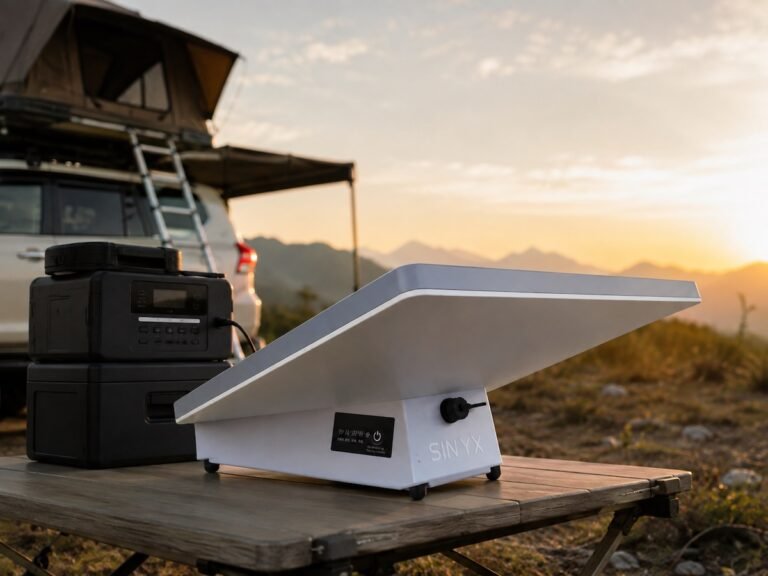
RAVION vs SINVYX: Which Starlink Mini Battery Should You Buy?
Pick RAVION Lite if you want to recharge from any USB-C charger. Pick SINVYX if you want a lower price at 99Wh…
Read more →
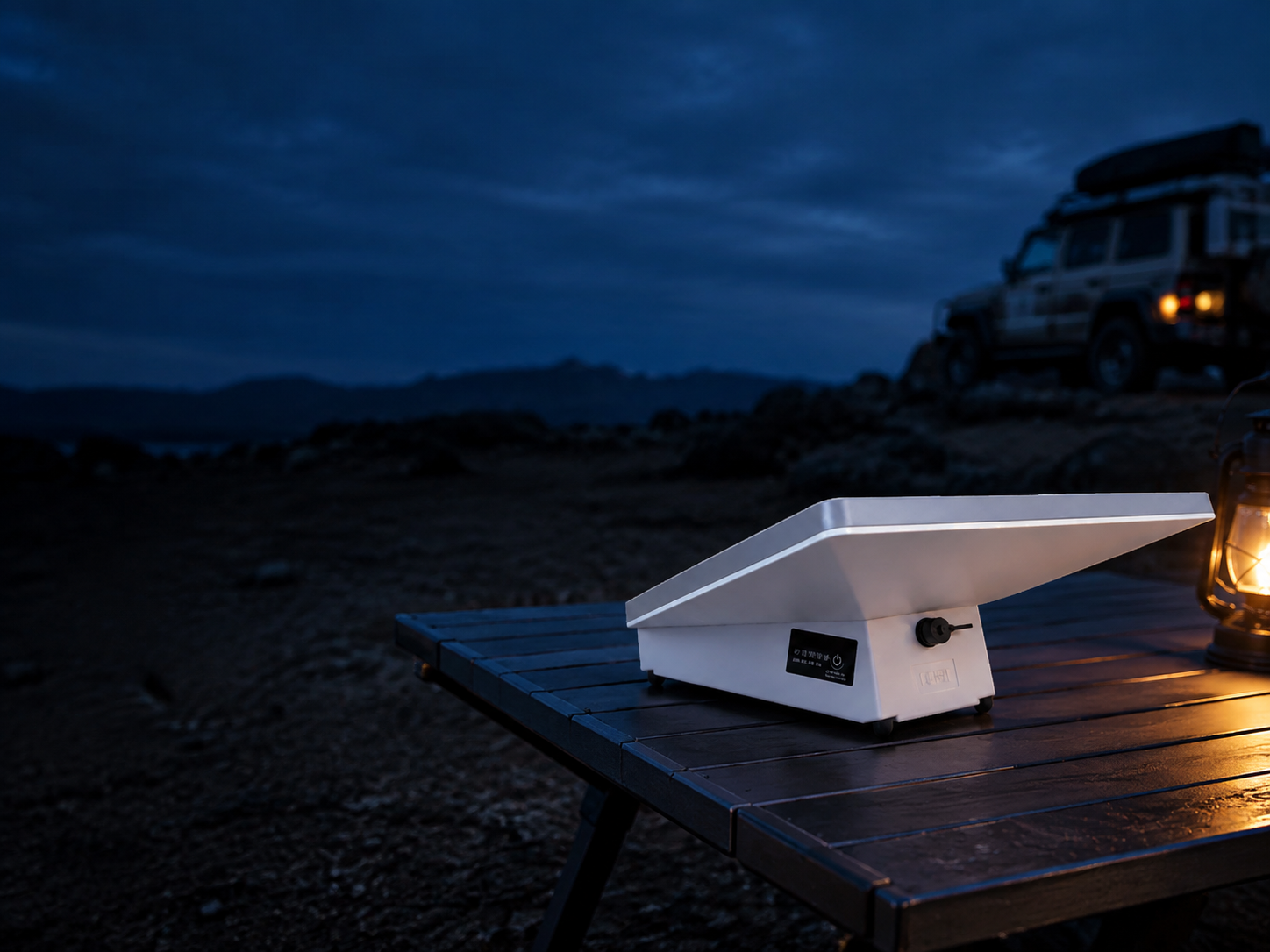
Direct answer: The best battery for Starlink Mini depends on how long you need to stay online, how you carry the setup, and when you can recharge. This guide compares eight selected battery packs from SINVYX, PeakDo, RAVION, and Ennzia by capacity, weight, mounting, and the basis of their runtime claims. A compatible USB-C power bank can also work. Use the comparison to narrow your options, then check the exact model’s charging requirements and flight restrictions.
Disclosure: This guide is published by SINVYX, which sells three of the models compared below. We have not conducted a controlled side-by-side runtime test of these eight batteries.
A dedicated battery offers a mounting and power connection designed for Starlink Mini. A general-purpose power bank offers a separate power source that may also charge your other devices.
The practical difference is how you carry, mount, connect, and recharge the setup. SINVYX batteries attach directly to the Mini and supply 15–21V DC. Other dedicated products may use a short connection cable or a different mounting arrangement. Check the actual model rather than assuming every clip-on battery removes every cable.
A compatible USB-C power bank is a valid option when you already own one or need shared power for a laptop and phone. With Starlink’s USB-C-to-barrel cable accessory, the official Mini specifications require USB PD rated at least 100W, with 20V/5A support. Check the power bank’s individual port, cable, and output profile before buying. We do not assume that generic power banks are inherently unreliable or less efficient.
Starlink’s Mini specifications list a 12–48V DC input range. That is the terminal’s input range, not the output range of every battery: SINVYX’s listed DC output is 15–21V. Check the exact power source, connector, and cable before connecting your setup.
Choose by runtime, connection, weight, and documentation before comparing headline claims. Our buying checklist covers the broader selection process.
The table keeps the original eight-model selection and identifies the basis of each runtime figure. Prices are listed USD prices checked for this revision on October 8, 2026; they may change, and bundles, tax, and shipping may differ.
| SINVYX 99Wh | SINVYX 158Wh | SINVYX 200Wh | PeakDo LinkPower 1 | PeakDo LinkPower 2 | RAVION Lite | RAVION | Ennzia E100 | |
|---|---|---|---|---|---|---|---|---|
| Listed price | $149.99 | $199 | $299 | $169 | $229 | $189 | $329 | $179.99 sale price |
| Listed battery weight | 0.79kg / 1.74lb | 1.1kg / 2.42lb | 1.1kg / 2.42lb | 645–667g; listing conflict¹ | ~667g / 1.47lb | 1.9lb | 2.6lb | ~800g / 1.75lb |
| Listed capacity | 99Wh | 158Wh | 200Wh | 99Wh | 99Wh | 99Wh | 158Wh | 99.4Wh |
| Runtime and basis | 2.1–3.4 hrs; planning estimate² | 3.4–5.4 hrs; planning estimate² | 4.2–6.8 hrs; planning estimate² | 4.5+ hrs; manufacturer claim, load not specified | ~5.5 hrs; reviewer’s field test³ | 4–6 hrs; manufacturer claim, load not specified | 6+ hrs / up to 9 hrs; manufacturer claim, load not specified | 2.5 hrs @40W; 4 hrs @25W; 5 hrs @20W; manufacturer claims |
| Disclosed cells | Samsung/LG 21700 NMC | EVE 21700 NMC | Samsung/LG 21700 NMC | 21700 lithium battery; cell brand not identified in reviewed page | 21700 lithium battery; cell brand not identified in reviewed page | Cell brand not identified in reviewed page | Cell brand not identified in reviewed sources | Samsung 21700; exact chemistry not specified in reviewed page |
| Standards listed by manufacturer⁴ | UN38.3, UL2743, FCC | UN38.3, UL2743, FCC | UN38.3, UL2743, FCC | Includes UN38.3, UL2056, FCC, CE, RoHS | Includes UN38.3, UL2056, FCC, CE, RoHS | Not identified in reviewed listing | Includes UN38.3, FCC, CE, RoHS in SLM-168 spec sheet | Not identified in reviewed listing |
| Manufacturer-listed IP rating⁵ | IP65 | IP65 | IP65 | IP65 in current page | IP65 | IP65 | IP65 | IP65 |
| Runtime source | Calculation below | Calculation below | Calculation below | Official listing | The Verge review | Official listing | Official listing | Official listing |
1. Weight discrepancy: PeakDo’s LinkPower 2 comparison section lists LinkPower 1 at about 645g, while the current LinkPower 1 parameters list about 667g. Confirm the shipped model’s weight with PeakDo rather than treating either number as settled.
2. SINVYX planning method: Estimated hours = rated Wh × 0.85 ÷ average load in watts. The lower end uses 40W; the upper end uses 25W, matching Starlink’s published average power range. The 85% usable-energy factor is a planning assumption, not a measured efficiency result. Figures are approximate. Temperature, battery age, operating mode, and actual load can change runtime. These estimates do not substantiate the previous 3–5, 5–7, or 7–10-hour claims under the same conditions.
3. Independent field result: In its March 21, 2026 LinkPower 2 review, The Verge reported about 5.5 hours per charge and an average Mini load around 18W in rural use. That is useful field evidence, but it is not a controlled comparison with SINVYX’s 25–40W planning estimates.
4. Documentation scope: The standards row reports what manufacturers list; we have not verified model-specific certificates, registry entries, or test reports for these packs in this comparison. A standard name such as UL2743 or UL2056 is not a certificate number and does not, on its own, establish a UL listing.
5. IP conditions: These are manufacturer-listed ratings, not weather tests performed for this article. For SINVYX, keep the charging-port cover closed during outdoor use and avoid submersion. Check each manufacturer’s instructions for charging and exposed-port restrictions.
Sources for the listed specifications: SINVYX’s 99Wh, 158Wh, and 200Wh pages; PeakDo’s LinkPower 1 and LinkPower 2 pages; RAVION’s Lite and standard model pages, plus its SLM-168 specification sheet; and Ennzia’s E100 page.
Among these models, SINVYX offers 99Wh, 158Wh, and 200Wh options. PeakDo adds Bluetooth monitoring, and LinkPower 2 has a magnetic charging connection and bypass mode. RAVION offers 99Wh and 158Wh options, while Ennzia lists a 99.4Wh pack with Samsung cells. These differences help you build a shortlist; the mixed runtime evidence does not establish which pack lasts longest at the same load. Our PeakDo vs. SINVYX comparison covers that pair in more detail.
Choose capacity around your continuous operating hours and your next charging opportunity. These SINVYX estimates use the same 25–40W load and 85% usable-energy assumption as the table.
You can stretch a trip by switching the Mini off between sessions, but intermittent use is different from continuous runtime. Our solar charging guide covers charging away from an outlet; actual solar output depends on conditions.
If you already know how you’ll use Starlink Mini, start here, then confirm the model details in the table above.
Not sure how many watts your setup will draw? Our Starlink Mini power requirements guide explains consumption, voltage and runtime planning.
There are dedicated battery products beyond the four brands in this table. For example, LiFirst lists an ULTRA 200Wh clip-on battery for Starlink Mini. That means SINVYX is not the only dedicated brand offering a 200Wh option. We have not added that model to this eight-model comparison or tested its performance.
Other roundups may mix clip-on batteries, USB-C power banks, and portable power stations. Compare them by capacity, connection requirements, weight, mounting, and the evidence behind runtime claims. A product omitted here is not automatically generic or unsuitable, and a document we did not find is not proof that it does not exist.
What’s the difference between a “Starlink Mini battery” and a regular power bank with a Starlink Mini cable?
A dedicated pack provides a mounting and power setup designed around the Mini. A regular power bank can also work when its output and cable meet Starlink’s requirements. Choose by your setup and charging needs rather than assuming one category always performs better.
Is SINVYX, PeakDo, RAVION, or Ennzia better?
SINVYX offers three capacity choices in this table; PeakDo offers monitoring features and a published LinkPower 2 field review. RAVION and Ennzia provide additional clip-on options, with specifications sourced above. We have not tested these packs under the same conditions, so this comparison cannot name a universal runtime winner.
Do all Starlink Mini batteries use the same battery chemistry?
Do not infer exact chemistry from the words “lithium-ion” or the 21700 cell size alone. SINVYX lists NMC cells from Samsung/LG for 99Wh and 200Wh, and EVE for 158Wh. Ennzia names Samsung cells; the reviewed competitor pages do not all specify exact chemistry.
Can I just use a Milwaukee or DeWalt tool battery instead?
It can be an option with an adapter designed for the exact battery and Starlink Mini. Check output voltage, connection requirements, and battery protection before choosing a setup. Our Milwaukee/DeWalt battery FAQ explores that approach.
What is included with a Starlink Mini battery pack?
Check the exact listing for the battery, mount, cables, and charger. SINVYX battery packs do not include the Starlink Mini terminal. Other sellers may offer different bundles, so confirm the contents before comparing prices.
Can I power Starlink Mini and another device from the same battery?
Check the power source’s per-port and shared-output limits, not only its headline wattage. Connecting a second device may change the power available to the Mini. Choose a setup whose documented outputs meet the needs of both devices.
Can I recharge the battery while Starlink Mini is running?
Check whether the exact model supports pass-through charging and which charger, cable, and input power it requires. Do not assume that every battery or charger combination will keep the Mini running during charging. See our pass-through charging guide for the questions to check before buying.
Start with the hours you need, then check capacity, mounting, charging, and flight restrictions. Use runtime claims only when you understand their load and test conditions. For SINVYX’s current lineup, compare the 99Wh, 158Wh, and 200Wh battery options, then open the 99Wh, 158Wh, or 200Wh page for model details.
Pick RAVION Lite if you want to recharge from any USB-C charger. Pick SINVYX if you want a lower price at 99Wh…
Read more →
Starlink Mini rebooting on 12V power almost always comes down to voltage instability, not a faulty dish. A raw car 12V circuit…
Read more →